Gardening asks a lot of your body in small doses. You bend to pull a weed, kneel to plant, lift a bag of potting mix, then carry a full watering can across the yard. None of it feels like exercise while you’re doing it, which is part of the appeal. But the same movements, repeated for an hour, are often why people come inside stiff and sore.
The good news is that a few changes in how you move can make a big difference to how you feel afterward. These six moves aren’t a workout program. They’re working positions and habits you can use every time you’re in the garden, whatever your age or experience.
Before you start: If you have a back condition, a recent injury, or a health concern that affects how you move, ask your doctor or physical therapist which positions are right for you. Stop if anything causes pain, dizziness or unusual breathlessness.
1. Hinge at the hips, not the waist
When you reach for something low, like a weed or a low-growing herb, the natural instinct is to round your back and fold forward. Try this instead:
- Stand with your feet about hip-width apart.
- Soften your knees.
- Push your hips back as if you’re closing a car door behind you, keeping your back long.
- Let your hands travel down toward the plant while your chest stays fairly open.
This “hip hinge” spreads the work across your hips and legs. It feels awkward at first. After a few sessions it becomes the way you reach.
Make it easier: Use a long-handled weeder or hand fork so you don’t have to reach as far.
2. Half-kneel instead of crouching
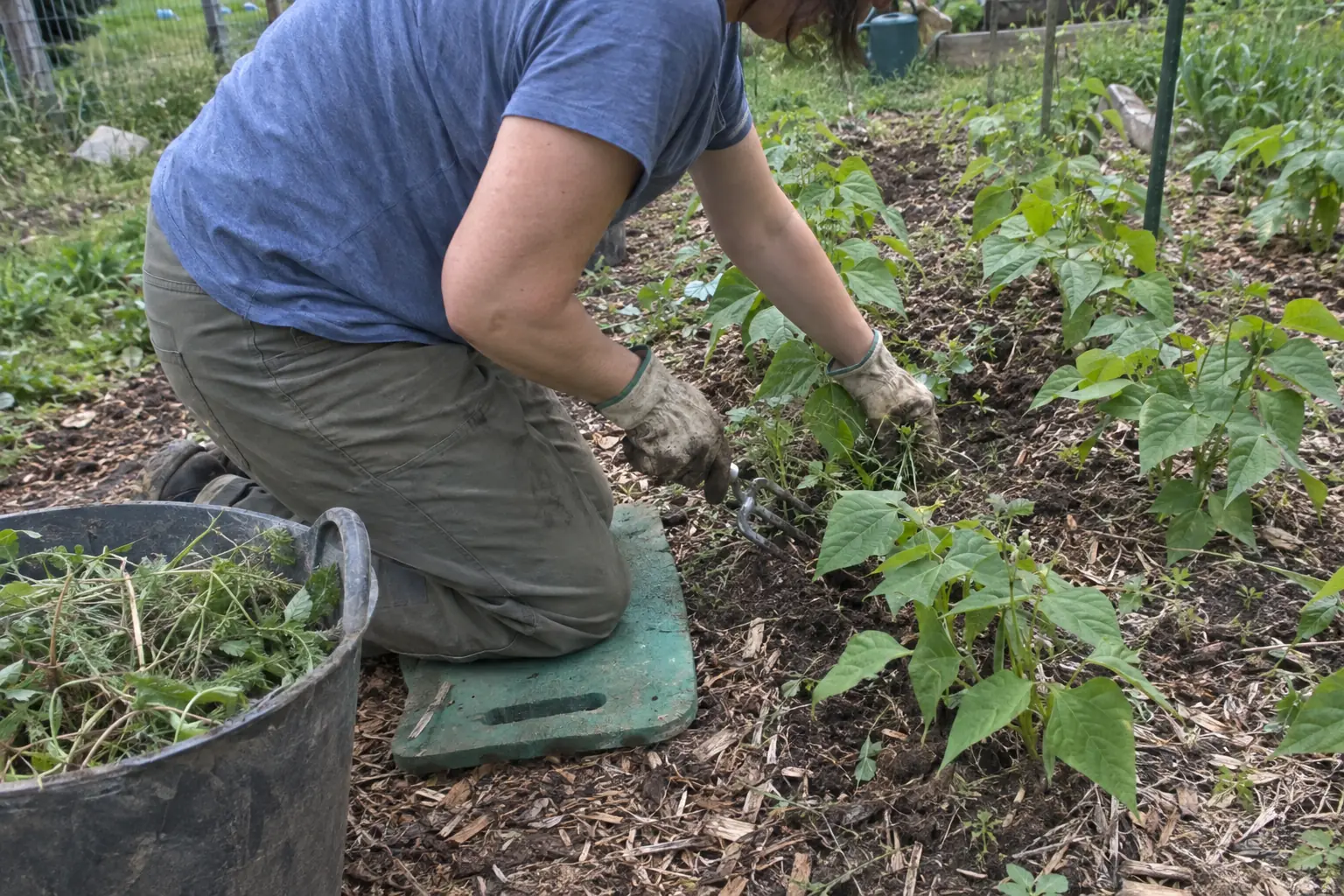
Crouching for a long time puts pressure on your knees and lower back. A half-kneel is steadier:
- Put a kneeling pad or folded towel on the ground.
- Kneel on one knee, with the other foot flat on the ground in front of you.
- Keep your chest upright and work in the area in front of you.
- Switch knees every few minutes.
A garden kneeler with handles on both sides helps you get up and down more easily, and many flip over to become a low seat.
3. Sit when the job allows it
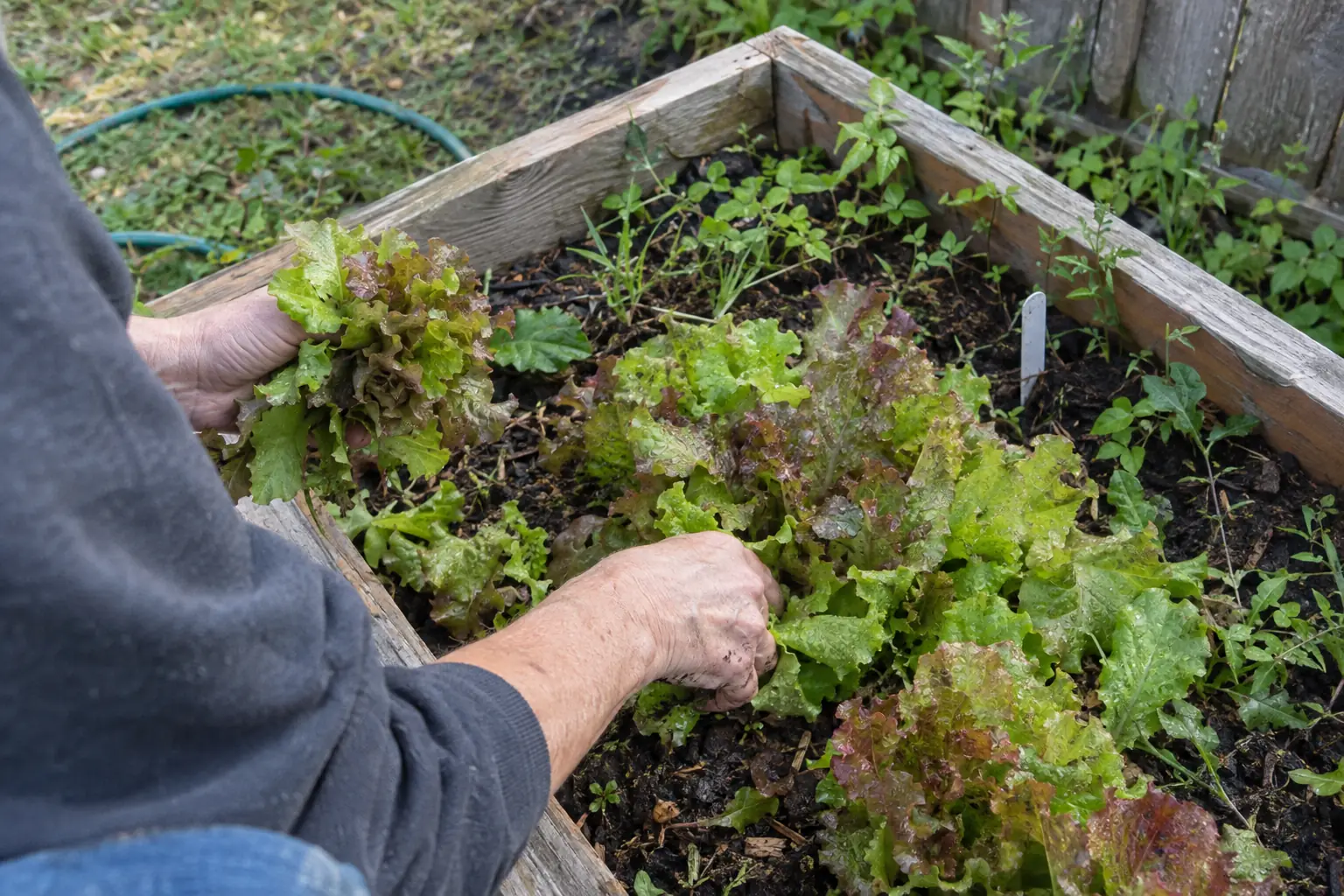
There’s no prize for doing everything standing up. Sowing seeds, potting up seedlings, harvesting beans, and weeding a raised bed can all be done sitting on a garden stool, a low bench, or the edge of a sturdy raised bed.
Sitting also makes the garden open to more people. If standing for long periods is difficult, plan your tasks so that the detailed, slow jobs are seated ones.
4. Keep loads close and split them up
Most garden lifting strain comes from holding something heavy away from your body or twisting while you carry it.
- Hold bags, pots and watering cans close to your body.
- Turn with your feet instead of twisting at the waist.
- Carry two half-full watering cans, one in each hand, instead of one full can on one side.
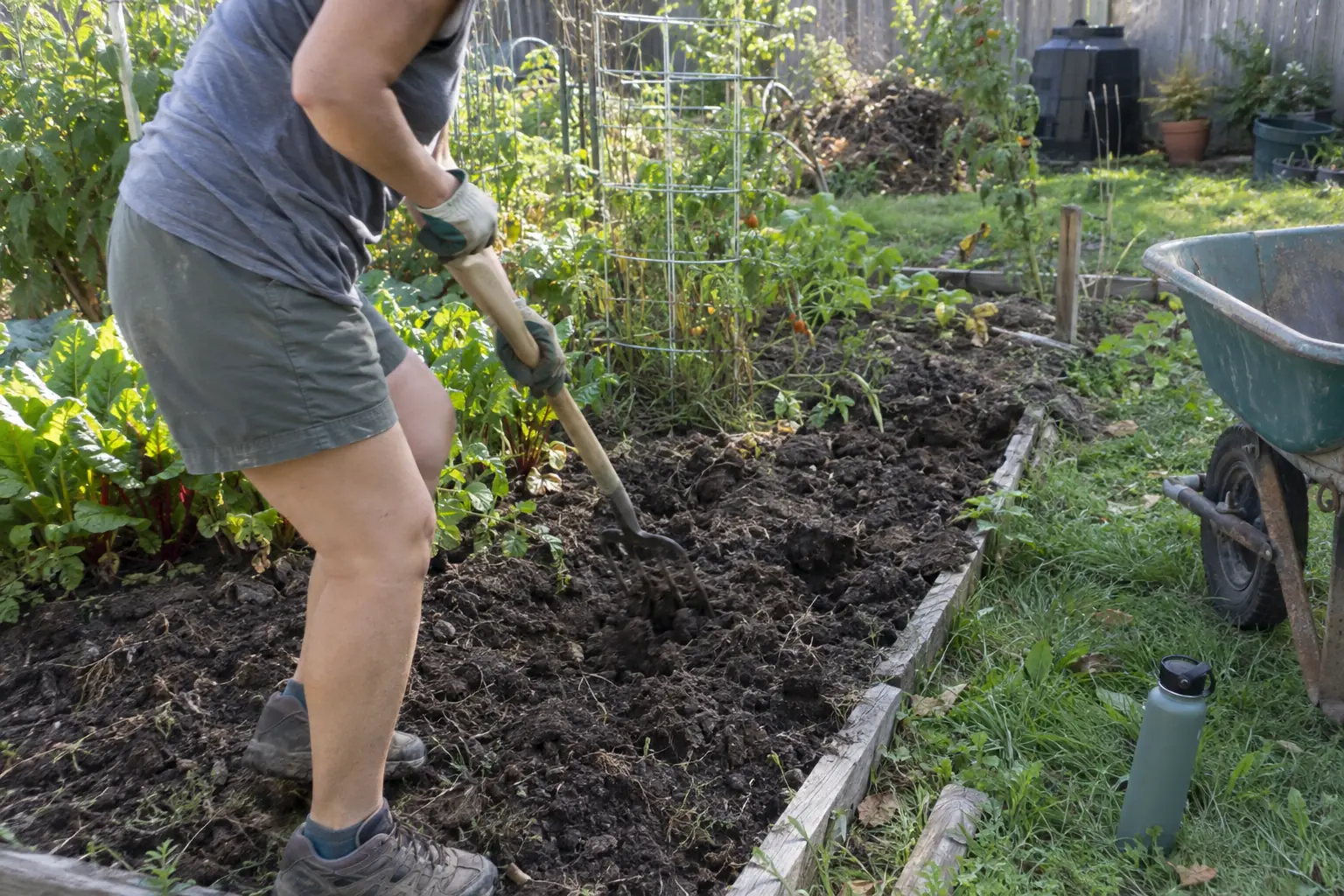
- Split a big bag of soil into buckets, or use a wheelbarrow or garden cart.
- Ask for help with anything you aren’t sure you can lift comfortably.
Smaller loads mean more trips, which also means more steps. That’s a fair trade.
5. Change tasks and sides every 15 to 20 minutes
Repeating one motion for a long time is hard on any part of the body. Break your gardening time into short blocks:
- 15 minutes of weeding while kneeling.
- 15 minutes of watering while walking.
- 15 minutes of seated potting or harvesting.
Switch which hand holds the tool, which knee is down, and which side you face. A kitchen timer or phone alarm is an easy reminder.
6. Warm up and wind down
A few minutes of gentle movement before and after gardening helps you ease in and out:
- Before: Walk around the garden and look at what needs doing. Roll your shoulders, circle your ankles, and gently swing your arms.
- After: Walk slowly, stretch your arms overhead if that’s comfortable, and have a drink of water.
Keep these movements gentle. They’re there to help you feel ready, not to push your range of motion.
Does gardening count as exercise?
Some of it can. The CDC recommends that adults aim for at least 150 minutes of moderate-intensity activity a week, plus muscle-strengthening activities on at least two days. Adults 65 and older are also encouraged to include activities that support balance. Some gardening tasks, like digging, raking, or pushing a loaded wheelbarrow, can feel moderate in effort for many people. Others, like planning or seed sowing, are gentle.
How hard a task feels depends on you, the job, and the day. Rather than counting gardening as a set number of exercise minutes, notice how you feel during and after each task, and choose what suits you. For more on this, see Gardening as exercise: what counts.
Set up the garden to do some of the work
Many back-friendly gardening habits start before you pick up a tool:
- Raise the work. Raised beds, salad tables and containers on stands bring plants closer to you.
- Keep paths clear. Firm, even paths and tidy hoses reduce trips.
- Store tools near where you use them. Less carrying, less searching.
- Choose lighter tools. Smaller spades, ergonomic handles and lightweight hoses all help.
- Garden in the cooler parts of the day. Check the weather, wear sun protection, take breaks in the shade, and drink water.
When to stop
Stop and rest if you feel pain, dizziness, unusual breathlessness, or simply unwell. Seek emergency care for severe symptoms such as chest pain. There’s always tomorrow in the garden.
This article is general education, not medical advice. It doesn’t replace advice from a doctor, physical therapist, or other qualified professional who knows your health.
Sources
- CDC. Adult Activity: An Overview.
- CDC. Older Adult Activity: An Overview.
- CDC. What Counts as Physical Activity for Older Adults.
- CDC. About Heat and Your Health.
- University of Maryland Extension. Growing Vegetables in Containers and Salad Tables.