Whether you have a large garden or a small pot of lettuce, grow what you love to eat. And remember that gardening is a skill — a practice you may need to learn before it becomes a joy.
To prevent disease, water plants’ roots, not their leaves, and regularly inspect crops to catch problems early. And consider getting a soil test.
Did you know Yoda was a very good gardener? It’s true. He not only had a green thumb, he had two green thumbs.
Having a green thumb is a popular way of saying someone grows plants successfully. It sometimes sounds, though, like an elusive trait that some people possess and others don’t. A green thumb is simply providing plants with what’s needed to thrive, and we can all do that.
I’m convinced that gardening success depends on small, simple things done correctly and at the right time. Remembering these small techniques from year-to-year builds the experience we call a green thumb.

Following are 25 simple gardening items that make big differences.
- Patience is a gardener’s best friend. Newly seeded lawns take time to establish, the longest-lived trees grow slowly, most perennials require three years to reach decent size, and even rhubarb should wait until the third year after planting before harvesting.
- Prune shrubs in spring instead of fall. Fall pruning carries greater risk, as pruning wounds are left wide open as winter approaches.

Knowing when to dig and divide perennials is a key to their success. Michael Vosburg/The Forum
- Dig, divide or transplant established perennials during the season opposite their bloom time. Potted perennials from garden centers can be planted anytime.
- When planting annual flowers from cell-packs, cut back flowers, buds, and lanky growth to produce a huskier plant with better long-term bloom.
- Maintain a lawn mowing height of three inches or more. Measure to be sure.
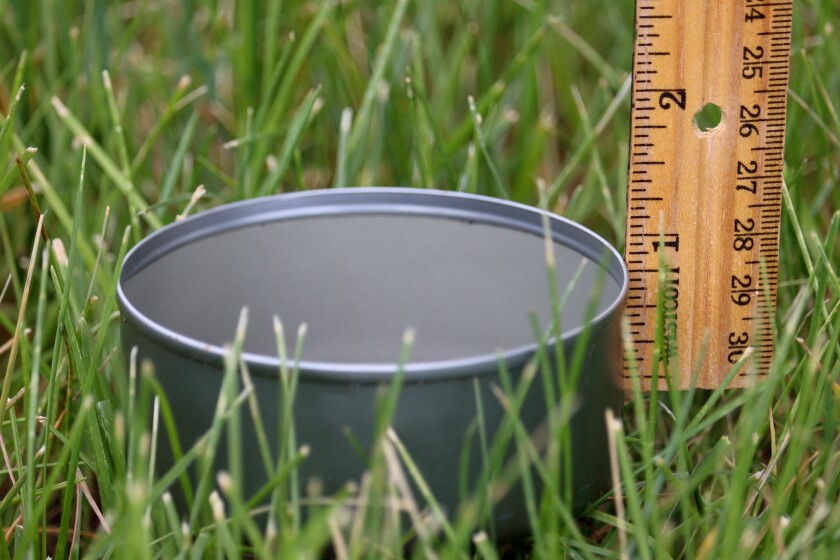
- Place a tuna can in the path of your sprinkler. Tuna cans are about one-inch deep and easily gauge when you’ve applied the recommended one-inch of water to lawns or garden.
To tell when your sprinkler has applied an inch of water, place a tuna can on the lawn or garden. Michael Vosburg/The Forum
- During dry spells, water thoroughly instead of more often.
- Plant tomatoes deeply. Remove the lowest set of leaves and bury the stem.
- Thin seedlings of carrot, beet, radish and lettuce to an inch apart to give them room to develop.
- Mulch the root area of clematis vines with shredded wood products to keep them cool. Clematis’ preferred location is facing east, giving morning sun and afternoon shade.
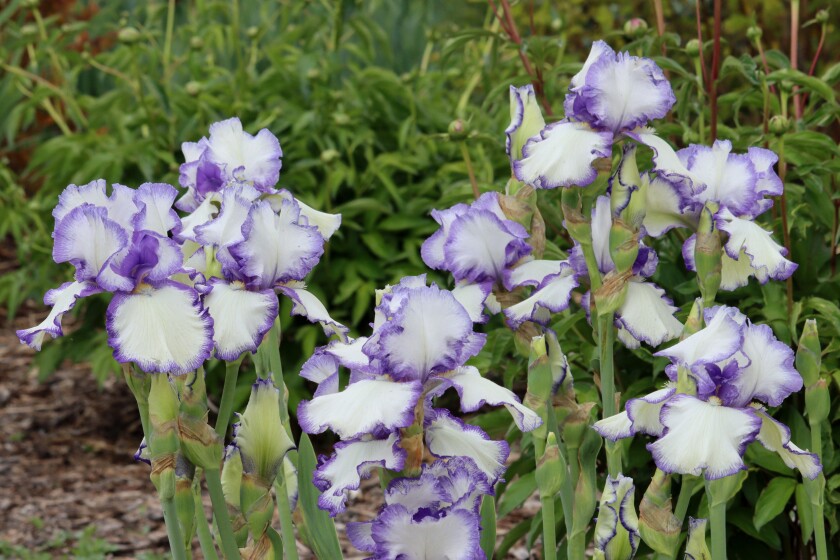
- Perennials vary in their lifespan. Not all are as long-lived as peonies and iris.
- Young trees grow quicker with a five-foot diameter circle of shredded wood mulch, five inches thick and kept five inches away from the trunk.
- When planting shrubs, check the mature width, giving each their required footprint to avoid overcrowding.
- When landscaping around our homes, most of us don’t come far enough out from the house foundation with our planting design.
- Hoeing garden weeds when they’re just breaking soil surface is a key to vegetable garden success.
- When dandelions or tree seedlings pop up in the middle of perennial flower clumps, hand digging with a trowel or old butcher knife is often the surest and safest way to remove.
- Pulling a few weeds each day during a brief walk around landscape and garden can help win the weed battle. Be on a mission to get weeds while small.
- Hydrangeas are water-loving, so keep them moist and mulched.
- When planting potted trees, cut circling roots, or pull them outward. Never plant with circling roots intact.
- Immediately after planting, thoroughly water perennials, trees, shrubs, annual flowers and vegetable plants to ensure good root-to-soil contact.
- Perennial flowers thrive in soil rich in organic material, such as peatmoss or compost.
- Moistening potting mix the day before using makes it mellow and easier to work with. You still need to water following planting.
- Never allow weeds to go to seed. They’ll populate the soil for years to come with seeds that can remain viable for decades.
- Smothering weeds with cardboard topped with mulch can aid weed control in perennial flowers.
- Wrapping the trunks of fruit trees in the fall is vital for preventing winter sunscald injury, which is a common killer. This past winter also proved the importance of fencing apple trees high for rabbit control.

Source: inforum.com