
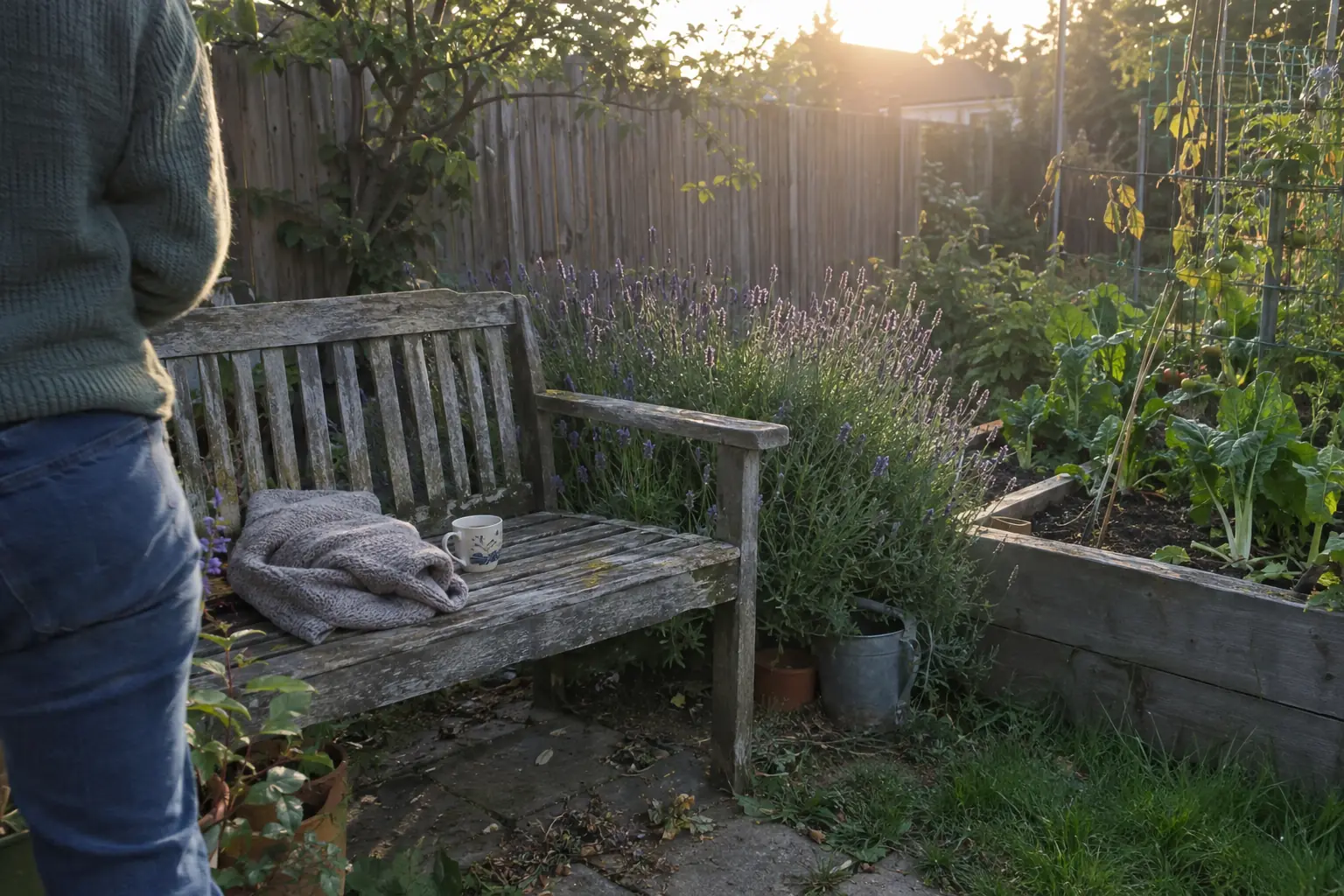
Ask any gardener why they do it, and you’ll often hear some version of “it makes me feel better.” Time outside, hands in the soil, watching something grow, a quiet half hour away from screens. It’s a common experience, and researchers have spent years trying to understand it.
This article looks at what that research says, where it’s still uncertain, and how to make your own garden a place you enjoy spending time. We’ll be honest about the limits, because you deserve straight answers, not big promises.
Important: Gardening isn’t a treatment for depression, anxiety, or any other health condition. If you’re struggling with your mental health, please talk to a doctor or mental health professional. If you’re in crisis in the US, call or text 988 to reach the Suicide & Crisis Lifeline.
What the research shows so far
A big-picture review (2024)
In 2024, researchers published an “umbrella review” in the journal Systematic Reviews. An umbrella review gathers the findings of many earlier reviews to look for overall patterns. This one focused on gardening and well-being, mental health, and quality of life.
The overall picture was encouraging: across many studies, gardening was generally linked with positive well-being outcomes. But the authors were also clear about the weaknesses. The studies varied a great deal in their design, the people involved, and what kind of gardening they looked at. Many couldn’t show whether gardening caused the improvements or whether people who already felt better were more likely to garden.
In plain terms, gardening and feeling well often go together, and that’s promising, but the research can’t yet say exactly how much gardening helps, or for whom.
A community gardening trial (2023)
One of the more rigorous studies is the CAPS trial, published in The Lancet Planetary Health in 2023. Researchers in Colorado randomly assigned adults who weren’t already gardening either to take part in a community gardening program for a growing season or to wait.
Compared with the waiting group, the gardeners showed some improvements, including higher fiber intake, more moderate-to-vigorous physical activity, and lower reported stress and anxiety. Not everything changed: for example, there was no clear difference in combined fruit and vegetable intake or in body measurements.
It’s a useful study, and it also has limits. It was a community program with support, shared plots and other people involved, which is different from gardening on your own at home. Its results don’t automatically apply to everyone.
What this means for you
Taken together, the research suggests that gardening may offer:
- A reason to be outside regularly. Fresh air, daylight, and a change of scene.
- Purposeful movement. Tasks that keep you active without feeling like a workout.
- A sense of progress. Seeds sprout, plants grow, and there’s something to show for your effort.
- Connection. Community gardens, swapping seedlings with neighbors, or gardening with family.
What the research doesn’t support is the idea that gardening reliably treats a health condition, or that a set amount of gardening produces a set improvement. Enjoy it for what it is.
Garden therapy vs. horticultural therapy
You may see “garden therapy” and “horticultural therapy” used as if they mean the same thing. They don’t.
Horticultural therapy is a professional practice. It’s delivered by trained practitioners, often in hospitals, rehabilitation centers, schools, or care homes, with specific goals set for each participant.
Garden wellness, which is what we talk about at Fitness Gardening, simply means using your own garden in ways that you find enjoyable and calming. It’s everyday self-care, not therapy.
Make your garden a calmer place
You don’t need a special “wellness garden” to enjoy these ideas. Try a few:
- Add a seat. A bench or chair where you can sit and look at what you’ve grown. Not every garden visit has to involve a job.
- Grow something for your senses. Lavender, rosemary, mint, or lemon balm for scent; tall grasses for sound; tomatoes warmed by the sun for taste.
- Keep a garden notebook. Jot down what you planted, what’s sprouting, and what you noticed. Over time, it becomes a record of your progress.
- Do a slow walk-through. Five minutes of looking without fixing anything. Notice what’s changed since yesterday.
- Keep it manageable. A garden that’s too big becomes a source of stress. Start small, and give yourself permission to let some things go.
- Garden with others. A neighbor, a grandchild, or a local community garden can make it more enjoyable.
- Make room for bad days. Plants die, pests happen, weather ruins plans. That’s normal. Every gardener has a story about a crop that failed.
The bottom line
Many people find gardening enjoyable, calming, and satisfying, and research so far is encouraging, with real limits. The best approach is to treat your garden as a place to enjoy, move, and grow food, and to look after your health with the help of qualified professionals when you need it.
Ready to start? The Fitness Gardening Playbook walks you through the six stages, from planning your first bed to keeping your garden going season after season.
This article is general education, not medical or mental health advice.
Sources
- The impact of gardening on well-being, mental health, and quality of life: an umbrella review and meta-analysis. Systematic Reviews (2024), 13:45. doi:10.1186/s13643-024-02457-9.
- Effects of a community gardening intervention on diet, physical activity, and anthropometry outcomes in the USA (CAPS): an observer-blind, randomised controlled trial. The Lancet Planetary Health (2023). PubMed 36608945.
- CDC. Adult Activity: An Overview.
- 988 Suicide & Crisis Lifeline. 988lifeline.org.